Friday, July 17, 2020

FOC PART - 1


कंप्यूटर


कंप्यूटर (अन्य नाम - संगणक, परिकलक; वस्तुतः एक अभिकलक यंत्र (programmable machine) है जो दिये गये गणितीय तथा तार्किक संक्रियाओं को क्रम से स्वचालित रूप से करने में सक्षम है। इसे अंक गणितीय, तार्किक क्रियाओं व अन्य विभिन्न प्रकार की गणनाओं को सटीकता से पूर्ण करने के लिए योजनाबद्ध तरीके से निर्देशित किया जा सकता है। चूंकि किसी भी कार्य योजना को पूर्ण करने के लिए निर्देशो का क्रम बदला जा सकता है इसलिए संगणक एक से ज्यादा तरह की कार्यवाही को अंजाम दे सकता है। इस निर्देशन को ही कम्प्यूटर प्रोग्रामिंग कहते है और संगणक कम्प्यूटर प्रोग्रामिंग भाषा की मदद से उपयोगकर्ता के निर्देशो को समझता है। यांत्रिक संगणक कई सदियों से मौजूद थे किंतु आजकल अभिकलित्र से आशय मुख्यतः बीसवीं सदी के मध्य में विकसित हुए विद्दुत चालित अभिकलित्र से है। तब से अबतक यह आकार में क्रमशः छोटा और संक्रिया की दृष्टि से अत्यधिक समर्थ होता गया हैं। अब अभिकलक घड़ी के अन्दर समा सकते हैं और विद्युत कोष (बैटरी) से चलाये जा सकते हैं। निजी अभिकलक के विभिन्न रूप जैसे कि सुवाह्य संगणक, टैबलेट आदि रोजमर्रा की जरूरत बन गए हैं। 

अभिकलित्र के भाग

निजी अभिकलित्र (पीसी) के प्रमुख भाग एक अभिकलित्र (संगणक) निम्नलिखित चार भागों से मिलकर बनता है : निविष्ट यंत्र , संसाधन यंत्र , निर्गम यंत्र और भंडारण यंत्र। (युक्ति को यंत्र भी कहा जता है।)

निविष्ट यंत्र(इनपुट डिवाइस)

  • निविष्ट यंत्र या इनपुट डिवाइस उन उपकरणों को कहते हैं जिसके द्वारा निर्देशो और आंकडों को संगणक में भेजा जाता है। जैसे- कुन्जी पटल (की-बोर्ड), माउस, जॉयस्टिक, ट्रैक बाल आदि।
    1. कीबोर्ड
    2. माउस
    3. माइक्रोफ़ोन या माइक
    4. क्रमवीक्षक (स्कैन्नर), अंकीय कैमेरा
    5. टच-स्क्रीन, टच-पैड

केंद्रीय प्रक्रमन इकाई

  • केंद्रीय प्रक्रमन इकाई (सीपीयू), संसाधन युक्ति या विचार युक्ति - यह अभिकलित्र की मूल संक्रियात्मक इकाई है जो आगम उपकरणों द्वारा दिए गए आंकड़ों के अनुरूप कार्य कर उसे निर्गत इकाई को भेजती है। इसके तीन भाग होते हैं:
    1. बही या पंजी (रजिस्टर) - सबसे पहले जिन आंकड़ों या सूचनाओं पर काम करना होता है, उन्हें अभिकलित्र स्मृति से बही में अंकित किया जाता है। अलग अलग प्रक्रियाओं के लिए अलग अलग बही होते हैं आंकिक एवं तर्क इकाई की संक्रिया के बाद सूचनाएं पुनः बही में दर्ज होती हैं और वापस स्मृती में भेजी जाती हैं।
    2. आंकिक एवं तर्क इकाई - यह इकाई बही में दर्ज सूचनाओं पर निर्देशों के अनुसार कार्य करती है तथा परिणाम को पुनः उपयुक्त बही में दर्ज कर देता है।
    3. नियन्त्रण इकाई - यह केंद्रिय प्रसाधन इकाई की सभी क्रियाओं का नियंत्रण करती है। जैसे कि स्मृति से सूचनाएं बही में वहाँ से आंकिक एवं तर्क इकाई में, वापस बही में तथा वहाँ से स्मृति में वापस जाने की प्रक्रिया पर यह इकाई नियंत्रण रखती है।

सूचना भंडारण उपकरण

पीसी में प्रयुक्त 64MB एसडीरैम (SDRAM)
  • सूचना भंडारण उपकरण या सुरक्षण उपकरण - यह अभिकलित्र में प्रयुक्त सूचनाएं सहेजती है।
    1. अल्‍पकालिक भंडारण उपकरण - कम समय तक सूचना के भंडारण के लिये
      1. यादृच्छिक अभिगम स्‍मृति या रैम (RAM)|रैंडम एक्सैस मैमोरी (रैम)
      2. पठन स्‍मृति या रीड ओन्ली मेमोरी (रौम)
    2. दीर्घकालिक भंडारण उपकरण - लंबे समय तक सूचना के भंडारण के लिये
      1. हार्ड ड्राइव या हार्ड डिस्क
      2. हटाये जा सकने वाला भंडारण उपकरण
        1. नम्यिका (फ्लॉपी डिस्क)
        2. कॉम्पैक्ट डिस्क (सीडी)
        3. अंकीय वीडियो डिस्क (डीविडी)
        4. चपला स्मृति भंडारण युक्ति या फ्लैश मेमोरी स्तोरेज डिवाइस
          1. यूऍसबी फ्लैश ड्राइव या फ्लैश मेमोरी ड्राइव
          2. फ्लैश मेमोरी कार्ड या फ्लैश मेमोरी स्तिक
        5. ब्ल्यू-रे डिस्क

निर्गम यंत्र

  • निर्गम यंत्र (आउटपुट डिवाइस)- इसमें वे सभी उपकरण शामिल हैं जिनसे प्रसाधित सूचनाएं या सामग्री मानवीय उपयोगी उत्पाद के रूप में बाहर आती हैं॥ जैसे-
    1. प्रदर्शक (मॉनिटर) - इसकी सहायता से प्रसाधित सामग्री दृश्य रूप में प्रकट होती है॥
      • स्क्रीन स्क्रीन पर चित्र य चल्चित्र प्रकत होते है। ये प्रदर्शक से जुडा होता है।
    2. मुद्रक- इसकी सहायता से निर्गत सामग्री को कागज़ पर मुद्रित किया जाता है। इसे अन्ग्रेजी भाषा में प्रिनटर भी कहते है।
    3. भोंपू - इसे स्पीकर भी कह्ते है, जैसा कि नाम से ही पता चलता है, ये आवाज निकालने का काम करता है। इसका उपयोग अभिकलित्र में चालू किसी भि प्रक्रिया से उत्पन्न आवाज को उपयोगकर्ता तक पहुचाने के लिये किया जाता है।

अभिकलित्र के प्रकार

अभिकलित्र का मुख्य कार्य दिये गये आंकड़े को जमा कर उसपर दिए गए निर्देशों के अनुरूप काम कर परिणाम देना है॥ कार्यक्षमता के आधार पर इसे निम्नलिकित श्रेणियों में बाँटा गया है- सुपर संगणक, मेनफ्रेम संगणक मिनी संगणक, एव माइक्रो संगणक आदि। सुपर संगणक इनमें सबसे बडी श्रेणी होती है, तथा माइक्रो संगणक सबसे छोटी।
  • सुपर संगणक सबसे तेज गति से कार्य करने वाले संगणक होते हैं। वह बहुत अधिक डाटा को काफी कम समय में इंफार्मेशन में बदलने में सक्षम होते हैं। इनका प्रयोग बड़े-बड़े कार्य करने में होता है, जैसे मौसम की भविष्यवाणी, डाटा माइनिंग, जटिल सिमुलेशन, मिसाइलों के डिजाइन आदि। इनमें अनेक माइक्रोप्रोसेसर [एक विशेष छोटी मशीन जो कम्प्यूटिंग के कार्य को काफी आसानी से तथा बहुत ही कम समय में कर सकने में सक्षम होती है।] लगे होते हैं। किसी जटिल गणना को कम समय में पूरा करने के लिये बहुत से प्रोसेसर एकसाथ (पैरेलेल) काम कराने पडते हैं। इसे पैरेलेल प्रोसेसिंग कहा जाता है। इसके अन्तर्गत जटिल काम को छोटे-छोटे टुकडों में इस प्रकार बाँटा जाता है कि ये छोटे-छोटे कार्य एक साथ अलग-अलग प्रोसेसरों द्वारा स्वतन्त्र रूप से किये जा सकें।
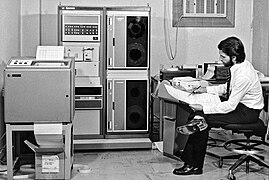
  • मेनफ्रेम संगणक, सुपर संगणक से कार्यक्षमता में छोटे परंतु फिर भी बहुत शक्तिशाली होते हैं। इन कम्प्यूटरों पर एक समय में २५६ से अधिक व्यक्ति एक साथ काम कर सकते हैं। अमरीका की आईबीएम कंपनी मेनफ्रेम कंप्युटरों को बनाने वाली सबसे बडी कंपनी है।
  • मिनी संगणक मेनप्रेम कंप्यूटरों से छोटे परnतु माइक्रो कम्प्यूटरों से बड़े होते हैं।
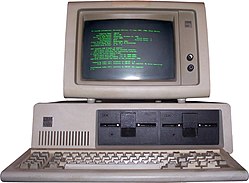
  • माइक्रो संगणक (पर्सनल संगणक) सबसे छोटे होते हैं तथा इन्हीं को वैयक्तिक संगणक या पर्सनल संगणक भी कहा जाता है। इसका प्रथम संस्करण १९८१ में विकिसित हुआ था, जिसमे ८०८८ माइक्रोप्रोसेसर प्रयुक्त हुआ था।
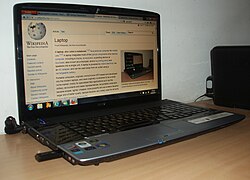
  • गोद के ऊपर रखने लायक संगणक (लैपटॉप)
  • हथेली के ऊपर रखने लायक संगणक (पाल्म्टॉप) - स्मार्टफोन, संगीत खिलाड़ी (म्यूजिक प्लयेर), वीडियो खिलाड़ी (वीडियो प्लेयर)
  • टैबलेट संगणक

अभिकलित्र के गुण

संगणक हमारे द्वारा दिये जाने वाले हर कार्य को बखूबी करने में सक्षम होते हैं। इनके कुछ गुण इस प्रकार हैं :
गति 
 संगणक काफी तेज गति से कार्य करते हैं, जब हम संगणक के बारे में बात करते हैं, तो हम मिनी सेकेन्ड, माइक्रो सेकेन्ड में बात नहीं करते, बल्कि हम 10-12 सेकेन्ड में एक कम्पयूटर कितना कार्य कर लेता है, इस रूप में उसकी गति को आँकते हैं।
न उबना
संगणक कभी भी उबते (बोर) नहीं हैं और यही इनका सबसे अच्छा गुण है, क्योंकि यह एक यंत्र हैं, इसलिये ये काफी दिनों तक बिना किसी शिकायत के कार्य करने में सक्षम होते हैं।
स्मरण करने या संग्रह की क्षमता
एक सामान्य संगणक भी एक बार दिये गये निर्देश को काफी समय तक स्मरण रखने में सक्षम होता है, तथा जब भी आवश्यकता पडे़, उसे फिर से लिखा और भरा जा सकता है। 

इतिहास

बीसवीं शताब्दी से पहले के संगणक उपकरण

यांत्रिक रेखीय (एनालॉग)
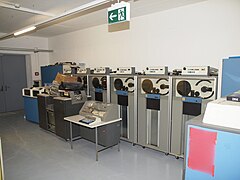
संगणकों का प्रादुर्भाव प्रथम शताब्दी में होना शुरू हो गया था जिन्हे बाद में मध्यकालीन युग में खगोल शास्त्रीय गणनाओ के लिए इस्तेमाल भी किया गया। यांत्रिक रेखीय संगणकों को द्धितीय विश्व युद्ध के दौरान विशेषीकृत सैन्य कार्यो में उपयोग किया गया। इसी समय के दौरान पहले विद्दुतीय अंकीय परिपथ वाले संगणको का विकास हुआ। प्रारम्भ में वो एक बड़े कमरे के आकार के होते थे और आज के आधुनिक सैकड़ों निजी संगणकों [3] के बराबर बिजली का उपभोग करते थे।
पहली इलेक्ट्रॉनिक अंकीय संगणक यूनाइटेड किंगडम और संयुक्त राज्य अमेरिका में 1940 और 1945 के बीच विकसित किया गया।
गणनाएँ करने के लिये यन्त्रो का इस्तेमाल हज़ारो वर्षो से होता आ रहा है खासकर उग्लियो से गिनती करने वाले उपकरणो का। शुरुवाती गणन यन्त्र सम्भवत: मिलान छड़ी|वो लकड़ी जिस पर गिनती के लिये दांत खोदे गये हो या मिलान छड़ी का एक रूप थी। बाद में मध्य पूर्व में उपजाऊ भूमि के एक भौगोलिक क्षेत्र जो कि आकार में अर्द्ध चंद्र जैसा दिखता है में अभिलिेखो को रखने के लिए कॅल्क्युली (मिटटी के गोले, शंकु) का इस्तेमाल होता रहा जो की अधपके और खोखले मिटटी के बर्तनो में रखा होता था। इनका उपयोग सामान की गिनती (अधिकतर पशुधन व अनाज) दर्शाने के लिए किया जाता था। [4][5] गिनती की छड़े|गिनती की छड़ों का उपयोग इसका एक उदहारण है।
स्वन पन (इस गिनतारे पर प्रदर्शित हो रही संख्या है ६,३०२,७१५,४०८)
शुरुवात में गिनतारे का उपयोग अंकगणितीय कार्यो के लिए होता था। जिसे आज हम रोमन गिनतारा कहते है उसका उपयोग २४०० ईसा पूर्व के प्रारम्भ में बेबीलोनिआ में हुआ था। तब से अब तक गड़ना व हिसाब लगाने के लिए कई अन्य गणन् पट्टियो व गोलियो का आविश्कार हो चुका है। एक मध्ययुगीन युरोपीय गडना घर|गड़ना घर में मेज पर चितकबरे कपडे को रख दिया जाता था और कुछ विशेष नियमो के अनुसार उसपर मोहरों को चलाकर पैसे जोड़ने के लिए एक साधन के तौर पे इस्तेमाल किया जाता था।
प्राचीन यूनानी रूपरेखा वाले एंटीकाईथेरा प्रक्रिया १५० से १०० ईसा पूर्व के समय के दुनिया के सबसे पुराने रेखीय संगणक हैं।
डेरेक जे. डी-सोला के अनुसार एंटीकाईथेरा प्रक्रिया को शुरुवाती यान्त्रिक अनुरूप अभिकलित्र माना जाता है।[6] इसे खगोलिय स्थितियो की गडना के लिये बनाया गया था। इसे एंटीकाईथेरा के युनानी द्धीप के एंटीकाईथेरा भग्नावशेष में १९०१ में खोज गया था।[7] इसे १०० ईसा पूर्व के समय का पाया गया। ऐसा माना जाता है कि एंटीकाईथेरा प्रक्रिया जैसी जटिलता वाले यन्त्र अगले १००० वर्षो तक मिलने मुश्किल है।
प्राचीन और मध्ययुगीन कालों में खगोलीय गणनाओं के निष्पादन के लिए कई एनालॉग कंप्यूटरों का निर्माण किया गया था। इनमें शामिल हैं प्राचीन ग्रीस की एंटिकिथेरा प्रक्रिया और एस्ट्रॉलैब (लगभग 150-100 ईसा पूर्व), जिन्हें आम तौर पर सबसे प्रारंभिक ज्ञात यांत्रिक एनालॉग कंप्यूटर माना जाता है।[8] एक या अन्य प्रकार की गणनाओं के निष्पादन के लिए इस्तेमाल किये जाने वाले यांत्रिक उपकरणों के अन्य प्रारंभिक संस्करणों में शामिल हैं प्लेनिस्फेयर और अबू रेहान अल बिरूनी (Abū Rayhān al-Bīrūnī) (लगभग 1000 ईसा पश्चात्) द्धारा आविष्कृत अन्य यांत्रिक संगणन उपकरण; अबू इसहाक इब्राहिम अल ज़र्काली (Abū Ishāq Ibrāhīm al-Zarqālī) (लगभग 1015 ईसा पश्चात्) द्वारा आविष्कृत इक्वेटोरियम और यूनिवर्सल लैटिट्यूड-इंडिपेंडेंट एस्ट्रोलेबल; अन्य मध्ययुगीन मुस्लिम खगोलविदों और इंजीनियरों के खगोलीय एनालॉग कंप्यूटर; और सोंग राजवंश के दौरान सू सोंग (लगभग 1090 ईसा पश्चात्) का खगोलीय क्लॉक टावर।
अल जजारी द्वारा 1206 में आविष्कृत एक खगोलीय घड़ी को सबसे पहला प्रोग्राम योग्य रेखीय संगणक माना जाता है।[9] यह राशि चक्र, सूर्य और चंद्रमा की कक्षाओं को दर्शाती थी, इसमें एक अर्द्ध-चंद्राकार सूचक एक संपूर्ण प्रवेश द्वारा से होकर गुजरती थी जिसके कारण हर घंटे पर स्वचालित द्धार खुल जाते थे[10][11] और पांच रोबोटिक संगीतकार जो एक पानी के पहिये (वाटर व्हील) से जुड़े कैमशाफ्ट द्वारा संचालित लीवरों द्वारा मारे जाने पर संगीत बजा दिया करते थे। दिन और रात की लंबाई को वर्ष भर में दिन और रात की बदलती लंबाइयों के लिए उपयुक्त बनाने के क्रम में हर दिन फिर से प्रोग्राम किया जा सकता है।[9]

संगणक के विकास का संक्षिप्त इतिहास

  • 1623 ई.: जर्मन गणितज्ञ विल्हेम शीकार्ड ने प्रथम यांत्रिक कैलकुलेटर का विकास किया। यह कैलकुलेटर जोड़ने, घटाने, गुणा व भाग में सक्षम था।
  • 1642 ई.: फ्रांसीसी गणितज्ञ ब्लेज़ पास्कल ने जोड़ने व घटाने वाली मशीन का आविष्कार किया।
  • 1801 ई.: फ्रांसीसी वैज्ञानिक जोसेफ मेरी जैकार्ड ने लूम (करघे) के लिए नई नियंत्रण प्रणाली का प्रदर्शन किया। उन्होंने लूम की प्रोग्रामिंग की, जिससे पेपर कार्डों में छेदों के पैटर्न के द्वारा मशीन को मनमुताबिक वीविंग ऑपरेशन (weaving operation) का आदेश दिया जाना सम्भव हो गया।
  • 1833-71 ई.: ब्रिटिश गणितज्ञ और वैज्ञानिक चार्ल्स बैबेज ने जैकार्ड पंच-कार्ड प्रणाली का प्रयोग करते हुए 'एनालिटिकल इंजन' का निर्माण किया। इसे वर्तमान कम्प्यूटरों का अग्रदूत माना जा सकता है। बैबेज की सोच अपने काल के काफी आगे की थी और उनके आविष्कार को अधिक महत्व नहीं दिया गया।
  • 1889 ई.: अमेरिकी इंजीनियर हरमन हॉलेरिथ ने 'इलेक्ट्रो मैकेनिकल पंच कार्ड टेबुलेटिंग सिस्टम' को पेटेंट कराया जिससे सांख्यिकी आँकड़े की भारी मात्रा पर कार्य करना सम्भव हो सका। इस मशीन का प्रयोग अमेरिकी जनगणना में किया गया।
  • 1941 ई.: जर्मन इंजीनियर कोनार्डसे ने प्रथम पूर्णतया क्रियात्मक डिजिटल कम्प्यूटर Z3 का आविष्कार किया जिसे प्रोग्राम द्वारा नियंत्रित किया जा सकता था। Z3 इलेक्ट्रॉनिक कम्प्यूटर नहीं था। यह विद्युतीय स्विचों पर आधारित था जिन्हें रिले कहा जाता था।
  • 1942 ई.: आइओवा स्टेट कॉलेज के भौतिकविद जॉन विंसेंट अटानासॉफ और उनके सहयोगी क्लिफोर्ड बेरी ने प्रथम पूर्णतया इलेक्ट्रॉनिक कम्प्यूटर के कार्यात्मक मॉडल का निर्माण किया जिसमें वैक्यूम ट्यूबों का प्रयोग किया गया था। इसमें रिले की अपेक्षा तेजी से काम किया जा सकता था। यह प्रारंभिक कम्प्यूटर प्रोग्रामेबल नहीं था।
  • 1944 ई.: आईबीएम और हार्वर्ड यूनीवॢसटी के प्रोफेसर हॉवर्ड आइकेन ने प्रथम लार्ज स्केल ऑटोमेटिक डिजीटल कम्प्यूटर 'मार्क-1' का निर्माण किया। यह रिले आधारित मशीन 55 फीट लम्बी व 8 फीट ऊँची थी।
  • 1943 ई.: ब्रिटिश वैज्ञानिकों ने द्वितीय विश्वयुद्ध के दौरान जर्मन कोडों को तोडऩे के लिए इलेक्ट्रॉनिक कम्प्यूटर 'कोलोसस' का निर्माण किया।
  • 1946 ई.: अमेरिकी सेना के लिए पेनसिल्वेनिया विश्वविद्यालय में भौतिकविद् जॉन माउचली और इंजीनियर जे. प्रेस्पर इकेर्ट ने 'इलेक्ट्रॉनिक न्यूमेरिकल इंटीग्रेटेड एंड कम्प्यूटर - इनिएक' (ENIAC) का निर्माण किया। इस कमरे के आकार वाले 30 टन कम्प्यूटर में लगभग 18,000 वैक्यूम ट्यूब लगे थे। इनिएक की प्रोग्रामिंग अलग-अलग कार्य करने के लिए की जा सकती थी।
  • 1951 ई.: इकेर्ट और माउचली ने प्रथम कॉमर्शियल कम्प्यूटर 'यूनिवेक' (UNIVAC) का निर्माण किया (सं.रा. अमेरिका)।
  • 1969-71 ई.: बेल लेबोरेटरी में 'यूनिक्स ऑपरेटिंग सिस्टम' का विकास किया गया।
  • 1971 ई.: इंटेल ने प्रथम कॉमॢशयल माइक्रोप्रोसेसर '4004' का विकास किया। माइक्रोप्रोसेसर चिप पर सम्पूर्ण कम्प्यूटर प्रोग्रामिंग यूनिट होती है।
  • 1975 ई.: व्यावसायिक रूप से प्रथम सफल पर्सनल कम्प्यूटर 'MITS Altair 8800' को बाजार में उतारा गया। यह किट फार्म में था जिसमें की-बोर्ड व वीडियो डिस्प्ले नहीं थे।
  • 1976 ई.: पर्सनल कम्प्यूटरों के लिए प्रथम वर्ड प्रोग्रामिंग प्रोग्राम 'इलेक्ट्रिक पेंसिल' का निर्माण।
  • 1977 ई.: एप्पल ने 'एप्पल-II' को बाजार में उतारा, जिससे रंगीन टेक्स्ट और ग्राफिक्स का प्रदर्शन संभव हो गया।
  • 1981 ई.: आई बी एम ने अपना पर्सनल कम्प्यूटर बाजार में उतारा जिसमें माइक्रोसॉप्ट के DOS (डिस्क ऑपरेटिंग सिस्टम) का प्रयोग किया गया था।
  • 1984 ई.: एप्पल ने प्रथम मैकिंटोश बाजार में उतारा। यह प्रथम कम्प्यूटर था जिसमें GUI (ग्राफिकल यूज़र इंटरफेस) और माउस की सुविधा उपलब्ध थी।
  • 1990 ई.: माइक्रोसॉफ्ट ने अपने ग्राफिकल यूज़र इंटरफेस का प्रथम वजऱ्न 'विंडोज़ 3.0' बाजार में उतारा।
  • 1991 ई.: हेलसिंकी यूनीवर्सिटी के विद्यार्थी लाइनस टोरवाल्ड्स ने पर्सनल कम्प्यूटर के लिए 'लाइनेक्स' का आविष्कार किया।
  • 1996 ई.: हाथ में पकड़ने योग्य कम्प्यूटर 'पाम पाइलट' को बाजार में उतारा गया।
  • 2001 ई.: एप्पल ने मैकिंटोश के लिए यूनिक्स आधारित ऑपरेटिंग सिस्टम 'Mac OS X' को बाजार में उतारा।
  • 2002 ई.: कम्प्यूटर इंडस्ट्री रिसर्च फर्म गार्टनेर डेटा क्वेस्ट के अनुसार 1975 से वर्तमान तक मैन्यूफैक्चर्ड कम्प्यूटरों की संख्या 1 अरब पहुँची।
  • 2005 ई.: एप्पल ने घोषणा की कि वह 2006 से अपने मैकिंटोश कम्प्यूटरों में इंटेल माइक्रोप्रोसेसरों का प्रयोग आरंभ कर देगा।


Wednesday, July 8, 2020

Foxpro

FOXPRO

I. FILL IN THE BLANKS:
1. To add more record at the end of any database file use the command …………….     Append
2. In FoxPro the field name must begin with a …………………..       Character
3. The ……………..command is used to exit from FoxPro to DOS.       Quit
4. The list command list …………..records on screen.         All
5. ? MOD (1965,100) returns …………………..         65
6. The …………………..command is used to close the database file in use.      Close database
7. You can move the command window to any where on the screen press the key …………..              Ctrl+F7
8. The ………………….command can be used to search for data in a database file.     Locate
9. To modify the structure of a database file ………………..command is used.     Modify structure
10. To define the page length for  a report ,select  page layout from ……….menu     Report
11. The command to modify a report file is …………….        Modify Report
12. The …………….function converts a numeric data to a character string.      STR()
13. The …………….command clears all  data from the screen.        clear
14. The ? command  displays data in the next row whereas ?? display it in the …………..row.
Current or same
15. ? Round (1234.6, -2) returns ………………………….        1200

16. The ……..command routes the output of ?/?? Command to printer.
Set printer on
17. Regardless of  the setting of SET PRINTER ,…………….sends data to the printer.
???
18. SECOND() and …………………are identical commands.
SYS(2)
19. The ……………..function returns the name of month from a date expression.
CMONTH()
20. CTOD is the reverse of the …………..function.
DTOC
21. The ……..function returns the name  of year from a date expression.      Year()
22. The default date style is …………………          mm/dd/yy
23. ?LEN(SALESMAN) returns …………………………       8
24. If VALUE contains 10,500,STR (VALUE, 3) returns…………      Asterisks
25. ………………command to assign CREATE to F9        SET FUNCTION F9 TO “CREATE:”
26. Name of the file that holds the default macro set is ………………….     DEFAULT.fky
27. ………………command create empty character variable       Space()
28. ………………command create memory variable.        =
29. ………………..command display yesterday’s date.        ?DATE()-1
30. ?MIN(3,12,11) returns ………………………        3
31. ? Ceiling (189.89) returns ……………..         190
32. The default file extension name used with program file is …………….     .PRG
33. A comment line in a program beings with …………….or ……………     * or NOTE
34. The …………removes blank spaces at the end of a character expression.     TRIM()
35. An EGA monitor can display ………or ………………..       25,43
36. The ……………………returns .T. if the specified file is in use.      USED()
37. FUNCTION”!” USED WITH @…….GET converts the entered characters to ……………             upper-case
38. To disable a bar use the ………………character as the first character of the prompt.              \
39. To use a particular letter of a pad or bar as the hot key, prefix…………..before that letter.              \<
40. To save all window definitions in the SAMPLE file, use the command ………….    SAVE WINDOWS ALL TO SAMPLE

41. The …………………..function returns the current record number      RECNO()
42. Accept creates a …………….type variables.         Character

43. check= I have a nice house, stuff (check,10,4,”Beautiful”)
                                   I have a beautiful house
44. ? CHR (65) returns…………………         A
45. ? ISALPHA (“123,TNAGAR”) returns …………………..      .F.

46. To activate a menu created with @……….PROMPT  command ,use the …………. Command.             MENU TO
47. When a popup bar is selected, the  ……………….. function returns the bar number.
  BAR ()
48. The ………………..Function rounds off a numeric expression.       Round()
49. ………………….removes all records from the current database file.      ZAP
50. The ………………function checks if value of an expression lies between values of two specified expression.            Between()
51. …………………command allow you to execute any DOS command without quitting FoxPro.             RUN
52. DATE () returns ……………………..          System date
53. Append record is in …………………..menu          Browse
54. To delete a record in BROWSE window press ……………..Key.       Ctrl+T
55. …………….command removing records permanently .        PACK
56. To resize the command window press………………keys.       Ctrl+F8
57. The default width of memo field is ………………        10
58. DEL command is same as ……………………..        DELETE
59. ………………..Command is used to link multiple databases.      SET RELATION
60. ……………Transfers record from one database file to another.      APPEND FROM
II.  TRUE OR FALSE
1. BROWSE can prohibit deletion of records.         True
2. FoxPro menu system has no option to deletion of records.       False
3. BROWSE has facility to turn off the vertical grid lines.       True
4. The field widths in the browse window can be changed.       True
5. The browse window can be divided in two horizontal windows.      False
6. The edit windows can berepositioned anywhere on the screen.      True
7. RECALL undeletes records deleted from the database with PACK.      False
8. DISPLAY NEXT 3 TO PRINTER FOR PIN=”110003”FIELDS NAME, PIN is invalid.             False
9. A database file can be sorted on a combination of fields. The combination can include a maximum of three fields.          False
10. One can use FoxPro function with SORT and INDEX.       False
11. ? PROPER (“NEW DELHI is a nice city”) displays “New Delhi Is A Nice City”.     True
12. Normally, the size of the sort file is the same as the original database file. However, it can be less in some cases.           True
13. One can index a database file in the descending order in all cases.      False
14. If a database file contains 4 fields, its structural compound index file can have up to 4 tags.              False
15. Structural compound index fields do not face the problem of corrupted index.    True
16. When you open a database file that has a structural compound index file, the first index tags becomes the controlling index tag.        False
17. Compact.idx files cannot be used with FoxPro version 1.0.       True
18. The independent compound index file of a database is opened automatically by FoxPro whenever required.           False
19. One can create an index tag while defining the structure, but not while modifying the structure of a database file.          False
20. The report window is divided into three parts.         True
21. To preview a report while designing it, Press ^P.         False
22. REPORT FROM SAMPLE SCREEN displays the report on the screen.      False
23. The RECORD () function returns the current record number.       False
24. A report can include up to a maximum of 7 page header lines.       False
25. The PAGE () function returns the current page number.        False
26. FoxPro for DOS cannot show bold letters while previewing a report.      True
27. One can enclose the report title within a box, but not a field in the detail line.     False
28. A field from the database cannot be included in pageheader.       False
29. A report can be grouped up to maximum of 2 levels.         False
30. The TOTAL command consolidates the report totals.        False
31. A report cannot use more than 4 detail lines.          False
32. REPORT FROM SALES DOUBLE displays the report in double spacing.      False
33. A one-dimensional array cannot be resized.          False
34. A two-dimensional array cannot be resized.          False
35. Only one array variable can be created with one DECLARE command.      False
36. A one-dimensional array cannot be converted to two-dimensional one.      False
37. Only one type of data can be stored in one array.         False
38. Data stored in an element of an array cannot be modified.        False
39. Element of a two dimensional array is referred to by a row, column subscript.     False
40. Condition and scope can be used with SCATTER.         False
41. The Min () function can use a maximum of three expressions.       False
42. Only numeric and character expression can be used with MIN()       False
43. The SUM command sums up the specified numeric variables.       False
44. If one enters COUNT after opening a database file, FoxPro displays the number of records in the database file.            True
45. FLOOR(189.89) returns 190.            False
46. CEILING (189.89) returns 190.           True
47. MOD (1200,100) returns 12.            False
48. ROUND (X, Y) is invalid if both X and Y are negative.        False
49. CALCULATE MIN () is similar to the MIN () function.        False
50. The use of OTHERWISE with DO CASE-ENDCASE is optional.       True
51. The use of ELSE with IF-ENDIF is optional.          True
52. ALLTRIM () is not supported in FoxPro.          False
53. DO WHILE .T. and DO WHILE .NOT. EOF () are similar.        False
54. A scope cannot be used with SCAN-ENDSCAN.         False
55. The maximum number of CASE statements in a DO CASE-ENDCASE structure is 32.               False
56. When a program calls another program file, the called program must have the RETURN command at the end.           False
57. A macro variable begins with &&           False
58. The nesting of program files can be done to a depth of 16 levels.       False
59. The WAIT command displays “Wait” on the screen.         False
60. The key pressed in response to WAIT WINDOW is stored in a special variable.     False
III. SHORT NOTES:

1. Explain what is a database File, Record & Filed?
2. Browse can prohibits deletion of records
3. Writes a program to check number of words in a sentence?
4. FoxPro menu system has no option to delete records.
5. Explain the difference between  the following
a) EDIT and CHANGE
b) DELETE and PACK
6. What is the procedure to edit the third record in a database file?
7. Explain sorting?
8. Write a program to display Floyd triangle.
9. Explain Indexing.
10. Explain the difference between  the following
a) LIST and DISPLAY ALL
 b) EDIT and PACK
11. Explain the use of SEARCH and LOCATE commands in FoxPro.
12. Explain COPY FILE command RENAME command?
13. Explain the features of FoxPro report?
14. Explain the difference between SORTING and INDEXING
15. Write a program to receive a word and display it in reverse order.
16. How will you join two tables? Write the steps?
17. Differentiate data processing and data management.
18. What are the advantages of relational database?
19. Writes a program to check whether the number is palindrome or not?
20. Explain the difference between  the following
a) APPEND and APPEND BLANK
b) DOW() and CDOW()
21. Explain any five BROWSE options.
22. Write a program in FoxPro to print N fibonacci numbers.
23. Explain the difference between ACCEPT and INPUT.
24. Explain IF-ENDIF and DO CASE –END CASE.
25. Writes a program to check whether the data starts with alphabet or digit?
26. Write the advantages and drawbacks of DBMS.
27. How to create Index file on multiple fields.
28. Writes a program to display the multiplication table of 7.
29. How to create compound index file with the index dialogbox.
30. Explain how to create it and how entering data in memo field.
31. How to display and print labels in FoxPro.
32. Writes a program to check whether the number is Armstrong or not?
33. How to create Array Memory Variables.
34. Explain SCATTER and GATHER command.
35. Explain COPY TO ARRAY and APPEND FROM ARRAY.
36. Explain Macro?
37. How we record and Editing Macros.
38. Explain DBMS?
39. Explain what is a program file? How we are creating a program file?
40. Explain RTRIM (), LTRIM () and ALLTRIM () with suitable example?
41. Explain advanced features of @……………SAY command.
42. How to create a check box in FoxPro.
43. How to create a push button in FoxPro.
44. Explain different file manipulation functions in FoxPro
45. Explain the difference between LOCATE and SEEK
46. Writes a program to check whether the number is Prime or not?
47. Explain different types of fields in FoxPro.
48. Write a program to sort ‘N’ names in alphabetical order.
49. Writes a program to check whether the number is odd  or even.
50. Explain how to set a function in a key.

IV. ESSAYS:

1. Explain different field types in FoxPro.
2. What is Rushmore technology? How does it increase the search speed with commands that use the FOR clause.
3. Explain date and time functions in FoxPro.
4. Explain the usage of @ command.
5. What is a memory variable? How to create and using memory variables?
6. Write a program to create a simple calculator.
7. Explain the use of Memo field in FoxPro?
8. Explain various Error conditions in FoxPro
9. Explain the different looping statements in FoxPro.
10. Explain how to create a report?
11. Explain different mathematical functions in FoxPro.
12. How will you add records to an existing table?
13. Explain different mathematical commands in FoxPro.
14. What is indexing? What are Independent Compound Index File and Structure Compound Index File?
15. Write a menu driven program that adds, deletes and find records of the database “Foxpro.dbf’”.

Saturday, July 4, 2020

RDBMS & SQL

Q. Which data manipulation command is used to combines the records from one or more tables?
A. SELECT
B. PROJECT
C. JOIN
D. PRODUCT
Answer : JOIN [Option : C]

Show Answer
Q.  Which of the following is not a valid SQL type?
A. DECIMAL
B. NUMERIC
C. FLOAT
D. CHARACTER
Answer : DECIMAL [Option : A]

 Show Answer
Q. SQL permits attribute names to be repeated in the same relation. (True or False)
A. FALSE
B. TRUE
Answer : FALSE [Option : A]

Show Answer
Q.  Which operator is used to compare a value to a specified list of values?
A. BETWEEN
B. ANY
C. IN
D. ALL

Answer : IN [Option : C]

Show Answer
Q.  A SQL query automatically eliminates duplicates (True / False) ?
A. TRUE
B. FALSE
 Answer : FALSE [Option : B]


Q.  The SQL used by front-end application programs to request data from the DBMS is called _______
A. DML
B. DDL
C. VDL
D. SDL

Answer : DML [Option : A]

Show Answer
Q. The command used to delete a particular column in a relation is ____________
A. UPDATE TABLE
B. TRUNCATE COLUMN
C. ALTER , DROP
D. DELETE COLUMN

Answer : ALTER , DROP [Option : C]

Show Answer
Q.  Which of the following operations requires the relations to be union compatible?
A. UNION
B. INTERSECTION
C. DIFFERENCE
D. ALL OF THESE
Answer : ALL OF THESE [Option : D]

Show Answer
Q.  The database language that allows us to access data in a database is called :
A. DCL
B. DML
C. DDL
D. None Of Above


Show Answer
Q.  Which of the following is a comparison operator in SQL?
A. Double equal sign ( == )
B. LIKE
C. BETWEEN
D. Single equal sign ( = )

Answer : Double equal sign ( == ) [Option : A]


Q.  Which of the following is a legal expression in SQL?
A. SELECT NULL FROM SALES;
B. SELECT NAME FROM SALES;
C. SELECT * FROM SALES WHEN PRICE = NULL;
D. SELECT # FROM SALES;

Answer : SELECT NAME FROM SALES; [Option : B]

Show Answer
Q.  DCL provides commands to performactionslike
A. Change thestructureof Tables
B. Insert, Update or Delete Records and Values
C. Authorizing Access and othercontrolover Database
D. None of Above
Answer : Authorizing Access and othercontrolover Database [Option : C]


Show Answer
Q.  The COUNT function in SQL returns the number of ______________
A. Values
B. Distinct values
 C. Group By
D. Columns

Answer : Values [Option : A]

Show Answer
Q.  Which data type can store unstructured data in a column?
A. RAW
B. CHAR
 C.NUMERIC
D. VARCHAR

 Answer : RAW [Option : A]

Show Answer
Q.  A SQL query will not work if there are no indexes on the relations - Is it true ?
A. NO
B. YES

Answer : NO [Option : A]


Q. Which function is used to divides one numeric expression by another and get the remainder ?
A. POWER
B. MOD
C. ROUND
D. REMAINDER

Answer : MOD [Option : B]

Show Answer
Q.  What is the full form of DDL ?
A. Dynamic Data Language
B. Detailed Data Language

C. Data Definition Language
D. Data Derivation Language

Answer : Data Definition Language [Option : C]

Show Answer
Q.  A database language used for defining the whole databasestructureand schema is called :
A. DCL
B. DML

C. DDL
D. All Of Above

Answer : DDL [Option : C]

Show Answer
Q.  The virtual table that its created by data from the result of an SQL 'Select' statement is called _________
A. View
B. Synonym
C. Sequence
D. Transaction

Answer : View [Option : A]

Show Answer
Q.  Which statement in SQL allows us to change the definition of a table is?
A. ALTER
B. UPDATE
 C. CREATE
D. SELECT


Q.  What do you mean by one to many relationship between Teacher and Class table?
A. One class may have many teachers
B. One teacher can have many classes
 C. Many classes may have many teachers
D. Many teachers may have many classes

Answer : One teacher can have many classes [Option : B]

Show Answer
Q.  What are the different view to present a Table ?
A. Datasheet View
B. Design View
 C. Pivote TableView
D. All Of Above

Answer : All Of Above [Option : D]

Show Answer
Q.  In one-to-many relationship the table on 'many' side is called _______
A. Parent
B. Child
C. Sister
D. Master

Answer : Child [Option : B]

Show Answer
Q.  In which state one gathers and list all the necessary fields for the database design project.
A. Data Definition
B. Data Refinement
C. Establishing Relationship
D. None Of The Above
Answer : Data Definition [Option : A]

Show Answer
Q.  Which of the following enables us to view data from a table based on a specific criterion
A. Form
B. Query
C. Macro
D. Report

Answer : Query [Option : B]

Show Answer 


Q.  Which database object is ideal to view, change, andanalyze datain different ways ?
A. Table
B. Form
C. Query
D. Report

Answer : Query [Option : C]

Show Answer
Q.  In one-to-many relationship the table in 'one' side is called _______
A. Child
B. Owner
C. Parent
D. Owner

Answer : Parent [Option : C]

Show Answer
Q.  Which data type allows alphanumeric characters and special symbols to be entered?
A. Text
B. Memo
C. Auto number
D. Mixed

Answer : Text [Option : A]

Show Answer
Q.  It is used to establish an association between related tables.
A. Line
B. Relationship
C. Primary Key
D. Records


Show Answer
Q.  This key that uniquely identifies each record is called :
A. Primary Key
B. Key Record
 C. Unique Key
D. Field Name

Answer : Primary Key [Option : A]


Q.  Which name must be unique within a database ?
A. Table
B. Field
 C. Record
D. Character

Answer : Table [Option : A]

Show Answer
Q.  The third stage of designing a database is when we create___________ between tables
A. Relationship
B. Join
C. Query
D. None of These

Answer : Relationship [Option : A]

Show Answer
Q.  Two tables can be linked with relationship to _____
A. Ensure data entry
B. Ensure data integrity
C. Create Primary Key
D. Ensure Foreign Key

Answer : Ensure data integrity [Option : B]

Show Answer
Q. In a database Table, the each category of information Is called __________
A. Tuple
B. Field
C. Record
D. All Of Above

Answer : Field [Option : B]

Show Answer
Q.  Which of the following fields has width of 8 bytes?
A. Memo
B. Number
C. Date/time
D. Hyperlink

Answer : Date/time [Option : C]

Q.  which of the following is not a database object?
A. Tables
B. Queries
 C. Relationships
D. Reports

Answer : Relationships [Option : C]

Show Answer
Q.  Which one is the guideline of Referential integrity in a relationship ?
A. Do not enter a value in the primary key field of chield table if that value does not exist inthe primary key of the parent table
B. Do not enter a value in the foreign key field of a parent table if that value doesnot exist in the primary key of the child table
C. Do not enter a value in the foreign key field of a child table if that value does not exist in the primary key of the parent table
D. Do not enter a value in the foreign key field of child table if that value does not exist inthe foreign key of the parent table

Answer : Do not enter a value in the foreign key field of a child table if that value does not exist in the primary key of the parent table [Option : C]

Show Answer
Q.  Which of the following is not a database model
A. Network Database Model
B. Relational Database Model
C. Object Oriented Database Model
D. None

Answer : None [Option : D]

Show Answer
Q.  The overall description of a database is called______.
A. Data integrity
B. Data manipulation
 C. Database schema
D. Data definition

Answer : Database schema [Option : C]

Show Answer
Q.  A data dictionary is a repository that manages _____
A. Memory
B. Metadata
C. Spell Checker
D. Data Validator

Answer : Metadata [Option : B] 


Q.  Which of the following are not Java keywords ?
A. double
B. switch
 C. then
D.instanceof

Answer : then [Option : C]


Oops with C++


c++
1-1. C++ was originally developed by
A.  
Nicolas Wirth
B.  Donald Knuth
C.  Bjarne Stroustrup            `
D.  Ken
 Thompson
1-2. The standard C++ comment
A.  /
B.  //
 
C.  /* and */
D.  None of these
1-3. The preprocessor directive #include is required if
A.  Console output is used
B.  Console input is used
C.  Both console input and output is used
D.  None of these
1-4. The operator << is called
A.  an insertion operator
B.  put to operator
C.  either a or b
D.  None of these
1-5. The operator >> is called
A.  an extraction operator
B.  a get from operator
C.  either a or b
D.  get to operator
1-6. The C++ symbol <<
A.  perform the action of sending the value of expression listed as its right to the
outputs strewn as the left.
B.  is used to indicate the
 action from right to left
C.  is adopted to resemble an arrow
D.  All of above
1-7. When a language has the capability to produce new data type, it is called
A.  Extensible
B.  Overloaded
C.  Encapsulated
D.  Reprehensible
1-8. C++ name was suggested by
A.  Rrick Mascitti
B.  Bjarne Stroustrup
C.  Donald Knuth
D.  Ken
 Thompson
1-9. What is a reference?
A.  an operator
B.  a reference is an alias for an object
C.  used to rename an object
D.  None of these
1-10. State the object oriented languages
A.  C++
B.  Java
C.  Eiffel
D.  All of the above


Answers
1 – C / 2 – B / 3 – C / 4 – C / 5 – C / 6 – D / 7 – A / 8 – A / 9 – B / 10 – D
______________________________________________________________


-1. A constructor is called whenever
A.  a object is
 declared
B.  an object is used
C.  a
 class is declared
D.  a
 class is used
2-2. Overload function in C++
A.  
a group function with the same name
B.  all have the same
 number and type of arguments
C.  functions with same name and same
 number and type of arguments
D.  All of the above
2-3. Operator overloading is 
A.  making C++ operators works with objects
B.  giving new meaning to existing C++ operators
C.  making new C++ operator
D.  both a & b above
2-4. A constructor is called whenever
A.  a object is
 declared
B.  an object is used
C.  a
 class is declared
D.  a
 class is used
2-5. A class having no name
A.  is not allowed
B.  can’t have a constructor
C.  can’t have a destructor
D.  can’t be passed as an argument
2-6. The differences between constructors and destructor are
A.  constructors
 can take arguments but destructor can’t
B.  constructors
 can be overloaded but destructors can’t be overloaded
C.  both a & b
D.  None of these
2-7. A destructor takes
A.  one argument
B.  two
 arguments
C.  three arguments
D.  Zero
 arguments
2-8. Constructors are used to
A.  initialize the objects
B.  construct the data members
C.  both a & b
D.  None of These
2-9. In C++ a function contained within a class is called
A.  a member function
B.  an operator
C.  a
 class function
D.  a method
2-10. The fields in a class of a C++ program are by default
A.  protected
B.  public
C.  private
D.  None of these


Answers
1 – A / 2 – A / 3 – D / 4 – A / 5 – C / 6 – C / 7 – D / 8 – A / 9 – A / 10 – C


1. Que. Which of the following type of class allows only one object of it to be created?
A. Virtual class
B. Abstract class
C. Singleton class
D. Friend class
Answer: Option C 

Que.  Which one is not a correct variable type in C++?

Show Answer  B

Que. Which operation is used as Logical 'AND'


Answer : Operator-&& [Option : C]
Que. An expression A.B in C++ means ____
A. A is member of object B
B. B is member of Object A
C. Product of A and B
D. None of these

Answer : B is member of Object A [Option : B]

 
Que. C++ code line ends with ___

A Semicolon (;)
B. A Fullstop(.)
C. A Comma (,)
D.A Slash (/)

Answer : A Semicolon (;) [Option : A]
.    
______ function is used to allocate space for array in memory.
A. malloc()
B. realloc()
C. alloc()
D. calloc()

Answer : calloc() [Option : D]


.    
Que A ponter pointing to a variable that is not initialized is called ____
A. Void Pointer
B. Null Pointer
 C. Empty Pointer
D. Wild Pointer

Answer : Null Pointer [Option : B]


QueDefault constructor has ____ arguments.
A. No argument
B. One Argument

C. Two Argument
D. None of these

Answer : No argument [Option : A]

Que .A class whos objects can not be created is known as _____
A. Absurd Class
B. Dead Class
C. Super Class
D. Abstract Class

Answer : Abstract Class [Option : D]

Q.  Which class allows only one object to be created.
A. Nuclear Family Class
B. Abstruct Class
C. Sigleton Class
D. Numero Uno Class

Answer : Sigleton Class [Option : C] 
Q. Reusability of code in C++ is achieved through ____
A. Polymorphism
B. Inheritance
C. Encapsulation
D.Both A and B

Answer : Inheritance [Option : B]

Q. In CPP, members of a class are ______ by default.
A. Public
B. Private
C. Protected
D. Static
Answer : Private [Option : B]
Q.  In C++ Program, inline fuctions are expanded during ____
A. Run Time
B. Compile Time
C. Debug Time
D. Coding Time

Answer : Run Time [Option : A]

Q.  To perfor file input / output operation in C++, we must include which header file ?
A. <fiostream>
B. <ifstream>
C. <ofstream>
D. <fstream>

Answer : <fstream> [Option : D]

Q.  An exceptio in C++ can be generated using which keywords.
A. thrown
B. threw
 C. throw
D. throws

Answer : throw [Option : C]


Data TypeSize (in bytes) Range
short int 2 -32,768 to 32,767
unsigned short int 2 0 to 65,535
unsigned int 4 0 to 4,294,967,295
int 4 -2,147,483,648 to 2,147,483,647
long int 4 -2,147,483,648 to 2,147,483,647
unsigned long int 4 0 to 4,294,967,295
long long int 8 -(2^63) to (2^63)-1
unsigned long long int 8 0 to 18,446,744,073,709,551,615
signed char 1 -128 to 127
unsigned char 1 0 to 255
float 4
double 8
long double 12
wchar_t 2 or 4 1 wide character


Tally

  अकाउंटिंग आधुनिक व्यवसाय का आकार इतना विस्तृत हो गया है कि इसमें सैकड़ों , सहस्त्रों व अरबों व्यावसायिक लेनदेन होते र...